
Český Krumlov: Best Sights, UNESCO & Why Visit
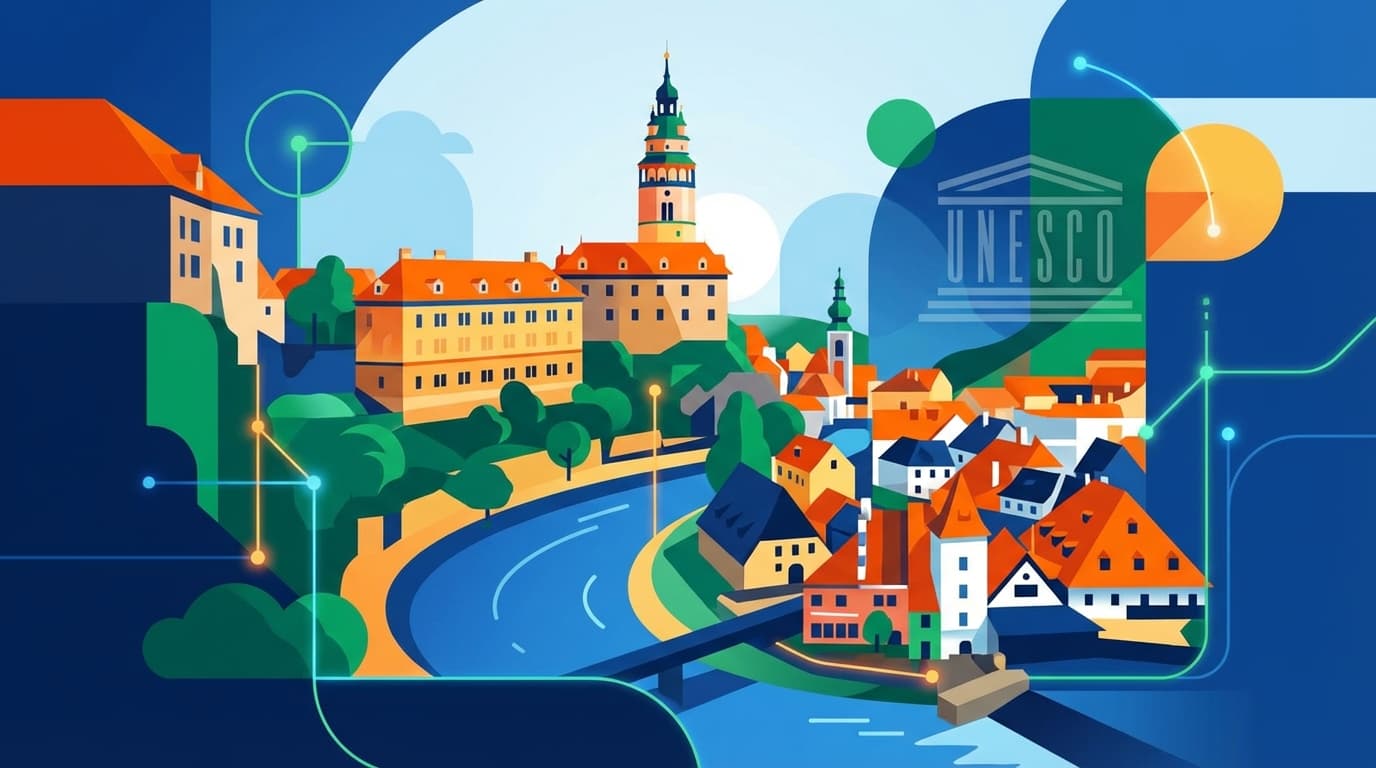
The Vltava River bends so sharply here that it nearly doubles back on itself, carving out a rocky peninsula just wide enough for a medieval town to cling to. Above it all, a castle complex sprawls across the hilltop like something pulled from an illuminated manuscript. This is Český Krumlov — a town in southern Bohemia that has remained virtually frozen in time for five centuries. With its cobblestone lanes, Renaissance facades, and that impossibly photogenic tower, it ranks among the most visually striking small towns anywhere in Europe. But Český Krumlov is far more than a pretty postcard. It's a UNESCO World Heritage Site, a living cultural stage, and a destination that rewards visitors who know where to look and when to arrive.
Whether you're planning a day trip from Prague or — as seasoned travelers strongly recommend — an overnight stay, this guide covers the best sights, the town's UNESCO significance, practical tips, and the compelling reasons to put Český Krumlov on your 2026 travel itinerary.
Why Is Český Krumlov a UNESCO World Heritage Site?
Český Krumlov earned its place on the UNESCO World Heritage List in 1992 under criterion (iv), recognized as an outstanding example of a Central European small town dating from the Middle Ages, according to the UNESCO World Heritage Centre. That puts it in rare company among the continent's most culturally significant historic settlements.
What makes the preservation so remarkable isn't just the beauty of individual buildings — it's the integrity of the entire urban fabric. The town's structure and buildings have remained relatively undisturbed for five centuries, preserving its original medieval layout and the organic relationship between the castle perched on the rocky promontory above and the town nestled in the river loop below. Unlike many Central European towns, Český Krumlov largely avoided the architectural interventions of 19th-century industrialization and the Communist era, according to UNESCO.
Walk through the historic center today and you'll encounter a townscape that a 15th-century resident would still broadly recognize. Narrow winding streets. Gothic and Renaissance burgher houses. A central market square. And that massive castle complex presiding over everything from above. This isn't a reconstructed heritage site or an open-air museum — it's a continuously inhabited town whose physical form has simply endured.
The State Castle and Chateau: The Crown Jewel of Český Krumlov
The State Castle and Chateau of Český Krumlov is the second-largest castle complex in the Czech Republic after Prague Castle, spanning 7 hectares across 40 buildings and palaces arranged around five courtyards, according to Zamek Cesky Krumlov. It's the single most important attraction in town, and it demands several hours of exploration at minimum.
Read also: Why Visit Vienna? Historic Center Highlights 2026
The Castle Tower
You'll spot it before you spot anything else. The Castle Tower is the unmistakable symbol of Český Krumlov, its colorful Renaissance facade visible from virtually every vantage point in town. Climb the 162 steps to the top and a 360-degree panoramic view unfolds — the Vltava River curving tightly around the red-roofed old town, forested hills rolling away in every direction. It's the kind of view that makes you stop talking mid-sentence.
As of 2026, admission to the Castle Museum and Tower is 280 CZK for adults, 220 CZK for seniors and students, and 80 CZK for children aged 6 to 17, according to Zamek Cesky Krumlov.
The Baroque Theatre
One of the castle complex's most extraordinary treasures hides from casual view. The Baroque Theatre is one of the most completely preserved Baroque theaters in the world, retaining its original stage machinery, scenery, and costumes. Not a replica. Not a restoration. The real thing — a functioning piece of 18th-century theatrical engineering that has survived intact. As of 2026, adult admission to the Baroque Theatre is 400 CZK, according to Zamek Cesky Krumlov.
The Castle Bears
Here's something you won't expect: brown bears live in the castle moat. This tradition dates back to the 16th century and is linked to the Rosenberg family legend, according to Zamek Cesky Krumlov. Visitors can observe the bears from the bridge above the moat, making it one of the most memorable and genuinely surprising encounters in town.
The Castle Garden
Beyond the castle's inner courtyards, the Castle Garden extends in Rococo style, featuring the Cascade Fountain and the Bellaria summer house. The garden also serves as the venue for one of the town's most distinctive cultural offerings — the Revolving Theatre (Otáčivé hlediště). This open-air theater physically rotates its audience seating during the performance, placing spectators inside the stage action. The 2026 season runs from June 3 to September 6, according to the Revolving Theatre's official program.
Best Sights in the Historic Old Town
The historic center of Český Krumlov, known as Vnitřní Město, is compact but richly layered — a medieval townscape that rewards slow, attentive exploration on foot. Beyond the castle, several key sights anchor the visitor experience.
Svornosti Square (Náměstí Svornosti)
Svornosti Square is the main medieval square and the social heart of the old town. The Renaissance Town Hall stands here alongside the Plague Column, a Baroque monument common to Central European towns that survived devastating epidemics. Colorful burgher houses ring the perimeter, and it's the natural starting point for any walking tour.
A word of practical advice echoed by broad community consensus: the restaurants directly on the main square tend to be tourist traps with inflated prices and mediocre food. You're better off seeking out taverns in the side streets of the Latrán district or near the river.
St. Vitus Church
The Church of St. Vitus is a prominent late-Gothic church built between 1407 and 1439 that dominates the town's skyline alongside the castle tower. Together, these two vertical landmarks create the iconic silhouette that defines Český Krumlov from every approach. Step inside and you'll find Gothic vaulting and a serene atmosphere that contrasts sharply with the bustling streets outside.
The Latrán District
Latrán sits below the castle, historically home to castle servants and artisans. Today it retains a quieter, more residential character than the main tourist streets. Many locals and experienced visitors point to this district as the place to find restaurants and shops that feel more authentic and less commercialized. If you only wander the main drag, you're missing the better half of Český Krumlov.
Cultural and Art Institutions Worth Your Time
Český Krumlov offers several cultural institutions that elevate it beyond a purely architectural experience, providing depth and context to the town's complex history.
Read also: International Geocaching Day 2026: Complete GPS Treasure Gui
Egon Schiele Art Centrum
Housed in a former 16th-century brewery, the Egon Schiele Art Centrum documents the life and work of the Austrian expressionist painter Egon Schiele, whose mother was born in Krumlov. The museum also hosts rotating contemporary art exhibitions, making it relevant to both art history enthusiasts and those drawn to modern creative work. Schiele's connection to the town adds a layer of early 20th-century cultural history to a place otherwise dominated by medieval and Renaissance narratives.
Museum Fotoateliér Seidel
The Museum Fotoateliér Seidel is a preserved Art Nouveau photography studio that offers a unique glimpse into the history of photography and life in the Czech-German borderlands. It's one of those small, specialized museums that catches you off guard — unexpectedly moving and intimate, the kind of place that transforms a good trip into a memorable one.
Why Visit Český Krumlov in 2026: Festivals, River Adventures, and the Fairytale Factor
People call Český Krumlov a living film set, a fairytale town. The description is earned. The meandering Vltava River, the cobblestone streets, the near-total absence of modern buildings in the historic center — all of it creates an atmosphere that feels transported from another era entirely.
The Five-Petalled Rose Festival
The town's most celebrated annual event is the Five-Petalled Rose Festival, confirmed for June 19–21, 2026, according to Ckrumlov.info. For three days, the entire town transforms into a Renaissance stage. Residents and visitors don period costumes. The streets fill with costumed parades, jousting tournaments, and medieval markets. It's one of the most immersive historical festivals in Central Europe and a compelling reason to time your visit for late June.
International Music Festival
Classical music, jazz, and opera enthusiasts should note that the International Music Festival Cesky Krumlov runs from July 17 to August 8, 2026, according to the festival's official program. Performances take place in unique venues throughout the town, including the Masquerade Hall and the Castle Garden — concert settings that no conventional concert hall can match.
Rafting and Canoeing Through the Historic Center
The Vltava River loops so tightly around the town that it creates one of Český Krumlov's most distinctive activities: you can rent canoes or rafts and float directly through the historic center. Seeing the castle and town walls from river level gives you a perspective that walking alone simply cannot offer. During the warmer months, it's also a particularly refreshing way to spend an afternoon.
Practical Information: Getting There and When to Go
Český Krumlov is most commonly visited as an excursion from Prague, and the logistics are straightforward.
Read also: Claude vs Gemini vs ChatGPT 2026: Strategic AI Choice
Transportation
- Bus (recommended): Direct buses operated by FlixBus and RegioJet run from Prague's Na Knížecí or Florenc stations and take approximately 2.5 to 3 hours. This is the most popular and efficient method.
- Train: Train travel is possible but often requires a transfer in České Budějovice. The South Express connects Prague to České Budějovice, followed by a local train to Český Krumlov.
Best Time to Visit
The shoulder seasons of April/May and September/October offer milder weather and noticeably fewer crowds than the peak summer months. This matters more here than it might elsewhere, because Český Krumlov's narrow medieval streets can become genuinely gridlocked with tour groups during peak summer days in July and August.
Day Trip vs. Overnight Stay
While Český Krumlov is enormously popular as a day trip from Prague, travel experts strongly recommend staying overnight. The reason is simple and transformative: the town empties out significantly after 5:00 PM when the tour buses depart. Visitors who remain experience a dramatically different place — quieter, more atmospheric, and far closer to the fairytale quality that draws people here in the first place. The evening light on the castle tower. The sound of the river without the background hum of crowds. The ability to walk through Svornosti Square without navigating around tour groups. These are experiences reserved almost exclusively for overnight guests.
The Overtourism Challenge: What Visitors Should Know
Český Krumlov is a town of approximately 13,000 residents that receives over 2 million visitors annually, according to In Your Pocket. That ratio — roughly 150 tourists for every resident over the course of a year — creates real tensions and practical challenges that honest travel coverage should acknowledge.
During peak summer days, the narrow streets of the historic center can become uncomfortably crowded, significantly diminishing the experience. Travel experts and locals have raised concerns about what some describe as the "Disneyfication" of the town — a process where authentic local life gradually gets pushed out by souvenir shops, hotels, and businesses catering exclusively to tourists.
None of this means visitors should avoid Český Krumlov. It means they should visit thoughtfully:
- Time your visit for the shoulder season (April/May or September/October) when crowds are more manageable.
- Stay overnight to experience the town after the day-trippers leave.
- Eat away from the main square — seek out the side streets of Latrán and the riverside for more authentic dining.
- Arrive early or late in the day if visiting during summer to avoid the midday crush.
Accessibility and Seasonal Considerations
Two practical limitations are worth knowing about before you go. First, the town is full of cobblestones and steep hills, making it challenging for visitors with mobility issues or those hauling heavy luggage. Second, the Castle interiors (guided tours) are generally closed from November to March, though the museum and tower remain open year-round, according to Zamek Cesky Krumlov. Planning a visit during the open season ensures access to the full range of castle experiences, including the remarkable Baroque Theatre.
Is Český Krumlov Worth the Trip?
Absolutely. Český Krumlov is one of the most visually extraordinary small towns in Europe, and its UNESCO World Heritage status is thoroughly deserved. The massive castle complex, the preserved medieval townscape, the cultural institutions, the dramatic river setting — together they create an experience that few destinations can rival.
The key to a great visit in 2026 lies in timing and approach. Come during the shoulder season or for a specific event like the Five-Petalled Rose Festival (June 19–21, 2026). Stay overnight to see the town in its quieter, more magical evening state. Explore beyond the main square into the Latrán district and along the river. Climb those 162 steps up the Castle Tower for the panoramic view. And if you can, float through the town on the Vltava for a perspective that captures the full improbable beauty of this place.
Český Krumlov has survived five centuries with its medieval character intact. It deserves visitors who take the time to appreciate what that means — not just as a photo opportunity, but as a living connection to the deep history of Central Europe.
Explore the City Your Way
Book a self-guided GPS treasure hunt and discover hidden gems, landmarks, and local secrets with your team.
Related Articles

Budapest Vienna Bratislava Family Trip
Budapest vs. Vienna vs. Bratislava: Which City Wins for a Family Trip? Three capital cities. All perched along or near the Danube. All within a few hours of each other by train. And all vying for your family's precious vacation time.

Europe's Hidden Travel Gems
10 Under-the-Radar European Destinations to Visit in 2026 Before Everyone Else Does Forget Paris. Skip Rome. Put Barcelona on hold for a year.

Walking Tours Showcasing Hidden Landmarks
The Ultimate City Guide Strategy: How to Create Walking Tours That Showcase Hidden Landmarks in 2026 Picture this: you're walking down a side street you've passed a hundred times, and someone points out a faded mosaic above a doorway — a remnant of...