
Create Self-Guided Walking Tours Like a Pro 2026
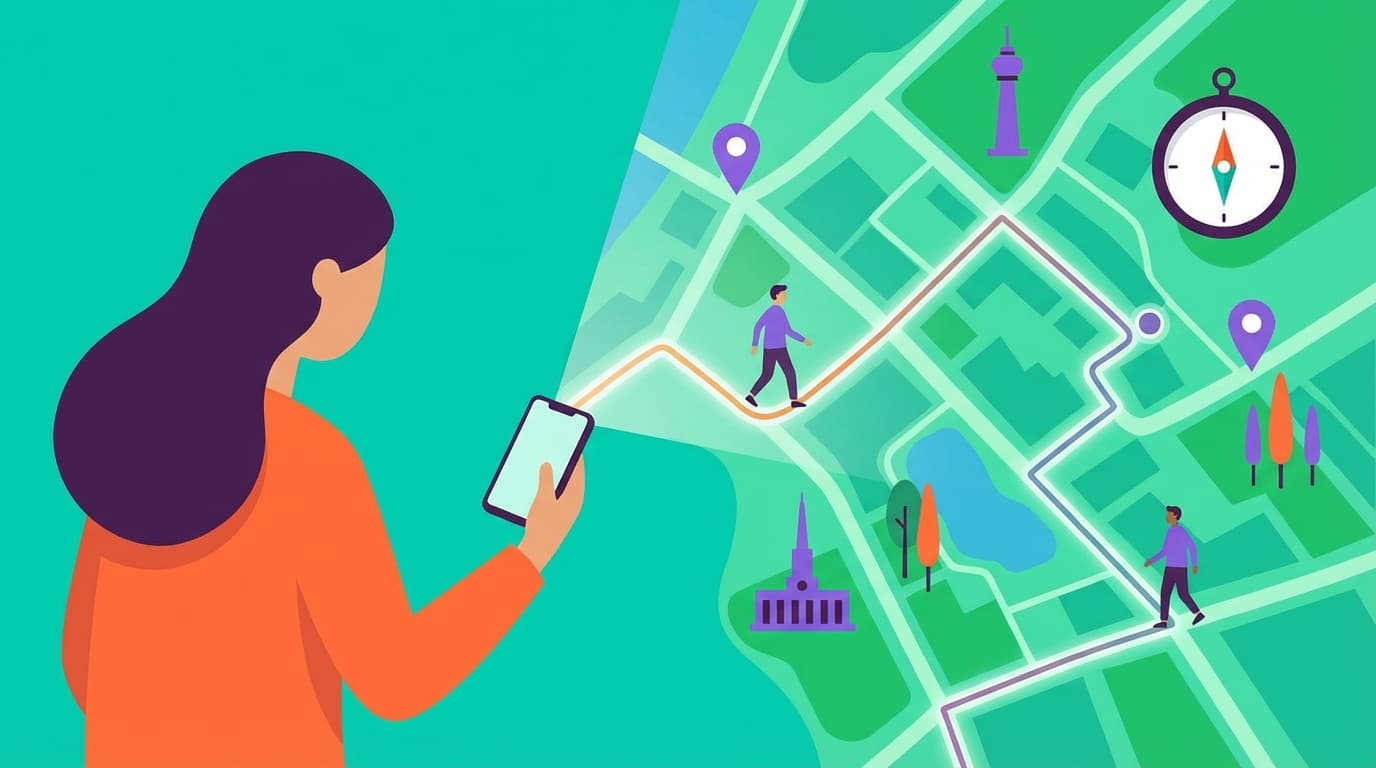
Forget the scratchy audio file and the folded paper map. The self-guided walking tour has grown into something far more ambitious — a sophisticated, immersive experience that now competes head-to-head with live professional guides on major travel platforms. In 2026, creators who nail the right combination of storytelling, spatial audio, and smart distribution can build tours that earn 50-80% royalties on direct sales, according to VoiceMap, while reaching millions of travelers through online travel agencies like Viator and GetYourGuide.
But rivaling a professional experience takes more than uploading a script to an app. It demands intentional audio engineering, narrative craft, and a distribution strategy that puts your tour in front of travelers at the exact moment they're planning their trip. This guide breaks down every layer of the process — from choosing your platform to marketing your finished product — using the tools and techniques that define the professional standard as of 2026.
Choosing the Right Platform and Technology Stack
The foundation of a professional-quality self-guided tour is what you might think of as "invisible technology" — an app experience that guides users without forcing them to stare at a screen. Your choice of publishing platform determines your GPS accuracy, offline capabilities, and access to paying customers. Get this wrong, and everything you build on top of it suffers.
Primary Publishing Platforms
- VoiceMap is the market leader for independent tour creators in 2026. It offers a map-based publishing tool with automatic GPS playback and offline mode. According to VoiceMap's creator forum, the standard royalty model sits at approximately 50% on sales, with specific campaigns for high-demand destinations offering up to 80% royalties. VoiceMap also distributes tours to Viator and TripAdvisor, giving creators access to massive travel audiences without additional setup.
- GPSmyCity focuses on converting blog posts into walking tours, operating on a subscription and revenue-share model. Travel bloggers gravitate toward it as a way to repurpose existing written content into a new format and revenue stream.
- STQRY and SmartGuide lean more toward B2B, often serving museums and city tourism boards. That said, they offer powerful AI-driven content management systems that serious independent creators can tap into. SmartGuide, in particular, uses AI to personalize itineraries for individual users.
Your platform choice carries long-term consequences. One real risk is platform lock-in: building exclusively on a single app like VoiceMap means you don't own the customer data. If the platform changes its royalty rates — a pattern we've seen play out across the creator economy — your revenue is exposed. Diversifying across platforms and maintaining direct sales channels is the smarter play.
The Audio Production Stack
Audio quality is the single biggest differentiator between an amateur tour and a professional one. In 2026, the production stack splits into two components: narration and immersive sound design.
For narration, ElevenLabs has become the industry benchmark for AI voiceover, according to the company's published capabilities. Its "speech-to-speech" and emotional control features — what ElevenLabs calls "emotional mapping" — prevent the monotonous, robotic delivery that tops the list of user complaints about audio guides. If hiring a professional human voice actor is outside your budget, ElevenLabs offers a viable alternative that rivals human performance for user retention.
For immersive atmosphere, binaural audio (3D spatial sound) is the technology that separates a "soundwalk" from a standard audio guide. Hardware like the 3Dio FS series microphones — physically shaped like human ears to capture spatial audio — lets creators record on-location ambience that places the listener inside the environment. On the software side, DAWs (digital audio workstations) like Reaper or Logic Pro paired with Dolby Atmos or Waves Nx plugins let you place specific sound effects in a precise 3D space around the listener's head.
Content Creation: What Makes a Tour Feel "Professional"
Professional guides succeed because of storytelling, not encyclopedic facts. The most common failure of self-guided tours? They read like textbooks — what critics describe as "encyclopedias read aloud." Rivaling a live guide means adopting narrative techniques that keep walkers engaged, oriented, and emotionally invested.
Scripting Strategy: The "Invisible Guide" Technique
The hallmark of a professional self-guided tour script is seamless integration of navigation and narrative. Instead of separating directions from content ("Turn left. Now, this building was built in 1842..."), professional scripts weave them together. Picture a line like: "As you walk towards the red door at the end of this alley, notice the iron balconies above you — each one tells a story of the families who watched revolutions unfold from those very railings." This approach keeps the phone in the pocket and the eyes on the city.
Every professional tour also needs a narrative arc — a unifying theme that transforms a collection of stops into a story. "The Ghostly Underbelly of London" is a tour. "London History" is a lecture. The theme gives walkers a reason to continue to the next stop and creates an emotional throughline that mirrors the experience of walking with a passionate, knowledgeable human guide.
Stop length matters enormously. The sweet spot for each stop is 90 to 120 seconds. Go longer and you risk the walker moving out of the GPS trigger zone before the narration finishes, shattering the seamless experience. This constraint actually helps your writing — every sentence must earn its place.
Immersive Audio Engineering: The Three-Layer Mix
A professional audio mix for a walking tour stacks three distinct layers, each serving a specific purpose:
- Layer 1 — Narration: Clear, dry, positioned in the center channel. This is the voice of your guide, recorded or generated without reverb or ambient noise so it cuts through whatever environment the walker is in.
- Layer 2 — Soundscapes: Background ambience recorded on location that plays between stops, bridging the silence as walkers move from one point to the next. This maintains immersion and prevents the jarring experience of narration suddenly cutting to dead air.
- Layer 3 — Sound Effects (SFX): Specific, triggered sounds — church bells, horse hooves on cobblestones, distant sirens — placed at narrative peaks to punctuate the story. When mixed with binaural plugins, these effects can appear to come from specific directions around the listener, creating a genuinely cinematic experience.
Solving the Biggest User Pain Points
The number one user complaint about self-guided audio tours is GPS drift combined with robotic narration, according to common user review patterns documented by SelfTour Guide. Fix these two issues and you separate a tour that earns five-star reviews from one that gets abandoned halfway through.
Read also: Budapest: Historic Beauty Meets GPS Treasure Hunts
GPS Drift and Urban Canyons
In dense urban environments — think the narrow streets of lower Manhattan or the high-rise corridors of Hong Kong — GPS accuracy can degrade to more than 20 meters of drift. Audio triggers late, fires at the wrong location, or doesn't fire at all. Professional-tier tours mitigate this in two ways:
- Trigger zones instead of single points: Rather than setting a GPS pin at a precise coordinate, professional creators define a broader "trigger zone" — a radius within which the audio will activate. This accounts for GPS imprecision and ensures the narration fires reliably.
- Text and photo fallbacks: Every stop should include written directions and a reference photo within the app. If GPS fails entirely, the walker can still navigate manually. This redundancy isn't optional for a professional-quality experience — it's essential.
The Headphone Problem: Isolation vs. Immersion
A persistent critique of audio guides, noted by sources like Musa Guide, is that they "make it easy to forget to feel." Headphones create a bubble that isolates travelers from the ambient sounds and spontaneous encounters that make city exploration memorable.
The best modern tours tackle this by recommending bone conduction headphones, which sit on the cheekbones and leave the ear canals open, or by including "transparency mode" prompts at key moments — explicit cues in the narration that tell the listener to pause, remove an earbud, and simply listen to the city around them. This intentional design choice turns a potential weakness into a feature.
AI Voices vs. Human Authenticity
While AI-generated narration from tools like ElevenLabs is widely accepted for budget-friendly tours, community sentiment reveals a clear premium market for what you might call "Local Legend" tours — experiences narrated by actual residents with authentic accents, local slang, and personal anecdotes. AI is tolerated. Human connection is still the hallmark of a premium experience. Creators targeting the higher end of the market should consider investing in local voice talent, even if AI handles the initial prototype.
Monetization and Distribution Strategy
Creating a polished tour is only half the equation. The most successful self-guided tours in 2026 aren't confined to a single app — they're distributed across multiple channels, leveraging the enormous traffic of global travel marketplaces.
Online Travel Agency (OTA) Integration
Platforms like Viator and GetYourGuide now accept digital and audio tours alongside their traditional live-guide offerings. For independent creators, this is significant: it places self-guided tours in direct competition with professional live experiences — on the same search results page where millions of travelers are already shopping.
The trade-off is commission. According to standard supplier terms published by Viator and GetYourGuide, creators should expect to pay 20-30% commission per booking to the platform. The strategic response is pricing: set your tour at a "no-brainer" price point of $5-$10, compared to the $30-$50 that live guided tours typically command. The sheer volume of traffic on these OTAs compensates for the lower per-unit revenue.
Direct Sales and Local Partnerships
Beyond OTAs, several direct-sales tactics work well:
- QR codes at the start location: Successful operators partner with local cafes, hotels, or tourist information boards to place stickers or cards with QR codes at the physical starting point of the tour. A traveler standing at the trailhead, already curious about the neighborhood, encounters a frictionless purchase opportunity.
- Airbnb "Digital Guidebooks": Smart creators provide free "mini-tours" — a single compelling stop or a short teaser — to local Airbnb hosts to include in their welcome guides. The mini-tour serves as a sample that upsells the full experience.
Marketing Self-Guided Tours in 2026
Short-form video on TikTok, Instagram Reels, and YouTube Shorts is the primary discovery engine for self-guided tours in 2026. The highest-converting format is a 15-second video showcasing a "hidden gem" — a stunning courtyard, a secret viewpoint, a bizarre piece of street art — with a caption like "Take the self-guided tour to find this." This creates curiosity-driven demand that funnels directly to a purchase page.
For creators who prefer not to appear on camera, "faceless" marketing using AI-generated visuals and voiceovers is a viable and increasingly common approach. The same ElevenLabs technology that powers tour narration can produce polished promotional voiceovers, while AI image and video tools create compelling visual content without requiring the creator to be on screen.
Maintaining a Professional Tour Over Time
Cities change constantly. A restaurant you reference closes. Construction blocks a key route. A landmark disappears behind scaffolding. A "professional" self-guided tour requires quarterly audits to ensure every stop, direction, and reference remains accurate. Neglecting maintenance is the fastest way to pile up negative reviews — and on platforms like Viator, a few one-star ratings can bury your listing.
User reviews consistently highlight both the strengths and vulnerabilities of self-guided tours. Positive feedback tends to celebrate flexibility: "Allowed me to pause for coffee," "No waiting for a slow group," "Better than a bored guide." Negative reviews cluster around technical failures and poor scripting: "GPS didn't trigger," "Voice was monotonous," "Directions were confusing." Every piece of negative feedback is a maintenance task waiting to be addressed.
Putting It All Together: A Step-by-Step Summary
Creating a self-guided city walking tour that genuinely rivals a professional experience in 2026 requires deliberate effort across five domains:
- Platform selection: Publish on VoiceMap or a comparable platform with GPS playback, offline mode, and OTA distribution. Diversify to avoid platform lock-in.
- Audio production: Use ElevenLabs for AI narration with emotional mapping, or invest in local voice talent for premium tours. Record binaural soundscapes with 3Dio microphones and mix with Dolby Atmos or Waves Nx plugins in Reaper or Logic Pro.
- Scriptwriting: Build a narrative arc around a compelling theme. Weave navigation into storytelling. Keep stops to 90-120 seconds. Write for the ear, not the eye.
- Distribution: List on Viator and GetYourGuide at a competitive $5-$10 price point. Deploy QR codes at start locations. Partner with Airbnb hosts for teaser content.
- Maintenance: Audit routes quarterly. Monitor reviews. Update scripts when the city changes.
The barrier to entry has never been lower, but the bar for quality has never been higher. Travelers in 2026 have experienced polished podcast storytelling, cinematic spatial audio, and seamless app experiences in every other corner of their digital lives. They expect the same from a walking tour. Meet that expectation, and you have a scalable digital product that earns revenue while you sleep — on every continent where travelers carry a smartphone and a pair of headphones.
Explore the City Your Way
Book a self-guided GPS treasure hunt and discover hidden gems, landmarks, and local secrets with your team.
Related Articles

Walking Tours Showcasing Hidden Landmarks
The Ultimate City Guide Strategy: How to Create Walking Tours That Showcase Hidden Landmarks in 2026 Picture this: you're walking down a side street you've passed a hundred times, and someone points out a faded mosaic above a doorway — a remnant of...

Why Visit Vienna? Historic Center Highlights 2026
Why Visit Vienna? The Best Highlights of the Historic Center in 2026 There's a moment, standing in the middle of Stephansplatz with a Gothic spire soaring above you and the faint sound of a string quartet drifting from a nearby courtyard, when...
Master Every Treasure Hunt
Treasure Hunt Mastery: 50+ Expert Tips and Strategies for 2025 Success Forget paper maps and hand-scrawled riddles. Treasure hunting in 2025 looks nothing like it did even a decade ago.