
Stephansdom Vienna's Unique Must-Visit
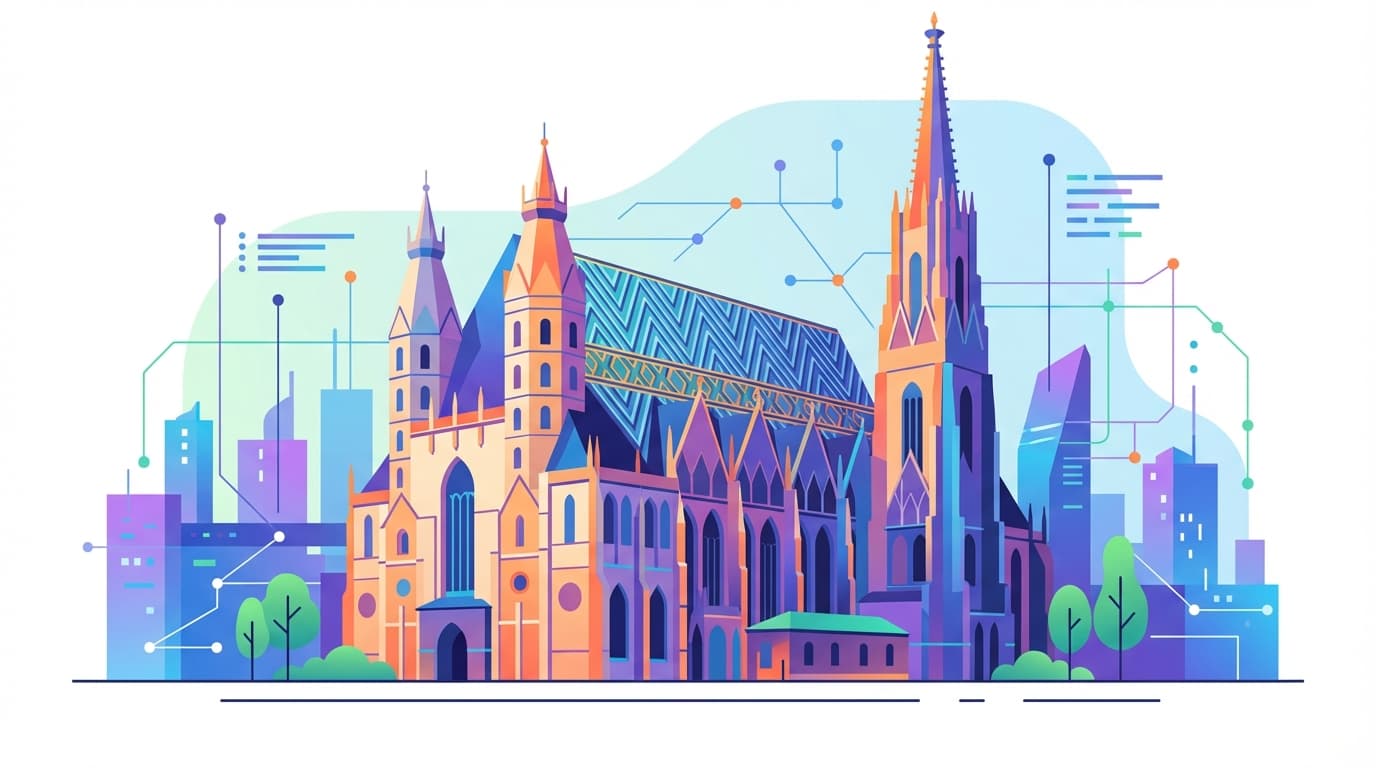
Stand anywhere in Vienna's old city and look up. Chances are, you'll spot it — the jagged Gothic spire of Stephansdom punching through the skyline, its mosaic roof shimmering like a jewel dropped into a sea of Baroque cream. St. Stephen's Cathedral, or Stephansdom as the Viennese call it, isn't just another European church. It's the beating heart of Vienna. A place where Ottoman cannons were melted into bells, where Habsburg intestines rest in copper urns, and where a secret anti-Nazi code hides in plain sight on the front wall. Whether you care about architecture, history, or simply want to stand at the exact center of one of Europe's greatest cities, this building has something to say to you.
But here's the real question: in a city overflowing with palaces, museums, and legendary coffeehouses, does Stephansdom actually deserve a spot on your itinerary? And what sets it apart from the dozens of other Gothic cathedrals scattered across the continent? Let's walk through it all — from the self-cleaning roof to the bones of 11,000 plague victims stacked beneath the floor.
Why Stephansdom Is Vienna's Defining Landmark
Stephansdom doesn't just happen to be in the center of Vienna. It is the center. According to the Vienna Tourism Board, the cathedral sits at Stephansplatz, right where the city's main shopping streets — Graben and Kärntner Straße — converge. Say "city center" in Vienna, and people think of this square. Between 3 and 6 million visitors pass through its doors every year, making it the most visited sight in the Austrian capital. That's not a typo — millions.
Architectural experts point to Stephansdom as a textbook example of the transition from Romanesque to Gothic architecture. The Giant's Door (Riesentor), the cathedral's main entrance, survives as a Romanesque masterpiece, heavy and grounded. Step inside, and the soaring nave launches you into full Gothic splendor. This layering of periods within a single structure gives the cathedral a depth that few European churches can match — you're essentially walking through centuries of architectural evolution in a matter of steps.
The cathedral also sits within the Historic Centre of Vienna, recognized by UNESCO for its outstanding universal value. It's not merely a building. It's the orientation point around which the entire city was built — and still revolves.
The Glazed Tile Roof: 230,000 Pieces of Art
Most Gothic cathedrals wear roofs of slate or copper. Stephansdom wears a crown. Its roof is covered in 230,000 glazed ceramic tiles arranged in 10 different colors, according to the St. Stephen's Cathedral Official Website. The effect is dazzling — a zigzag pattern of color that catches the light and makes the cathedral instantly recognizable from any elevated point in the city.
Read also: Why Visit Vienna? Historic Center Highlights 2026
What's Depicted on the Roof?
These tiles aren't random decoration. They form enormous heraldic images that tell you exactly whose city this was:
- South side: The double-headed eagle, the iconic symbol of the Habsburg Empire.
- North side: The coats of arms of the City of Vienna and the Republic of Austria.
You can spot these massive mosaics from elevated vantage points across the city. But the best way to appreciate the craftsmanship? Take the North Tower elevator and see the tiles up close. The detail is staggering.
Self-Cleaning Engineering
Here's where medieval ingenuity gets genuinely impressive. The roof is pitched at a remarkably steep angle — up to 80 degrees in some places. That extreme pitch does double duty: rainwater naturally washes the glazed tiles clean, and snow slides off before it can accumulate and damage the structure. The result? A roof that has maintained its vivid appearance for centuries with minimal human intervention. Engineers today still tip their hats to whoever designed it.
Two Towers, Two Stories: The Asymmetrical Skyline
Look at Stephansdom head-on and something feels off. The two towers are dramatically different — one soars, the other squats. This wasn't a design choice. History simply got in the way.
The South Tower ("Steffl")
The Viennese call the South Tower "Steffl," and they say it with affection. Completed in 1433, it stands 136.4 meters tall, according to the St. Stephen's Cathedral Official Website. For centuries, it was the highest point in Vienna and served a critical civic function as a fire watchtower until 1955. Watchmen stationed at the top would scan the city for smoke and raise the alarm — a job that lasted well into the modern era.
Today, the South Tower offers the best open-air panoramic view of Vienna. The catch? No elevator. You climb 343 narrow spiral steps to reach the viewing platform. The staircase is tight, not wheelchair accessible, and can test anyone with mobility issues or claustrophobia. But those who make it to the top are rewarded with an unobstructed 360-degree view of the city that no other vantage point can match.
The North Tower
The North Tower was supposed to mirror the South Tower — a matching Gothic spire that would create a perfectly symmetrical facade. That never happened. Construction halted in 1511 as the Gothic era faded and money ran dry. Instead of a soaring spire, builders capped it with a Renaissance dome — sometimes called the "water tower top" — leaving it at just 68.3 meters tall. Roughly half the height of its southern sibling.
What the North Tower lacks in height, it compensates for in accessibility and treasure. An elevator carries visitors to the top, making it the option for anyone who can't manage the South Tower's punishing stairs. And up there waits one of Austria's most famous objects: the Pummerin bell.
The Pummerin: Austria's Largest Bell
The Pummerin weighs an astonishing 20,130 kilograms. It's Austria's largest bell and the second-largest free-swinging chimed church bell in Europe, surpassed only by the bell in Cologne Cathedral, according to the St. Stephen's Cathedral Official Website.
Read also: QR Codes for Geocaching and Treasure Hunts: The Simplest Path Without Special Apps
Its origin story reads like a war epic. The original Pummerin was cast from 208 cannons captured from Ottoman invaders after the failed Siege of Vienna in 1683. Think about that for a moment — enemy weapons, melted down and reborn as a voice of celebration. It was triumph made audible.
That original bell didn't survive. It shattered during a devastating fire in 1945, near the end of World War II. The current Pummerin was cast in 1951 from the remnants of its predecessor, and it rings only on special occasions. The most famous? New Year's Eve. When the Pummerin's deep, resonant tone rolls across Vienna at midnight, it's broadcast to the entire nation. Standing in the cold Vienna night as that bell tolls — that's not tourism anymore. That's something else entirely.
The Catacombs: 11,000 Skeletons and Habsburg Intestines
Beneath the cathedral lies one of Vienna's most unsettling and fascinating spaces: the catacombs. You can only enter on a guided tour, and what you find down there tells a story of plague, death, and one of the strangest royal burial customs in European history.
The Mass Graves
When plague swept through Vienna — and it did so repeatedly over the centuries — the catacombs served as mass burial sites. The bones of approximately 11,000 citizens remain interred here, stacked and arranged in underground chambers. The sheer scale is sobering. These aren't abstract historical figures. They're the physical remains of a city devastated by disease, and they're right beneath your feet as you stand in the nave above.
The Habsburg Tripartite Burial
Now for the truly bizarre part. The Ducal Crypt follows the Habsburg tradition of splitting the bodies of deceased royals into three parts, each buried in a different location:
- Bodies: Buried in the Capuchin Crypt (Kapuzinergruft).
- Hearts: Placed in the Augustinian Church (Augustinerkirche).
- Intestines and viscera: Interred in the Ducal Crypt at St. Stephen's Cathedral.
So when you descend into the catacombs of Stephansdom, you are standing in the presence of the internal organs of some of the most powerful rulers in European history. Morbid? Absolutely. Strange? Without question. Unique to Vienna? Completely.
Travel community reviews on platforms like TripAdvisor and Google consistently describe the catacombs tour as "spooky" and "fascinating," though many reviewers note it may not be suitable for very young children due to the visible bones.
Hidden Gems: Symbols, Legends, and Secret Portraits
Stephansdom is packed with details that most visitors walk right past. These hidden gems reward the curious — and they're exactly the kind of discoveries that turn a standard sightseeing stop into something memorable.
Read also: Budapest: Historic Beauty Meets GPS Treasure Hunts
The "O5" Resistance Symbol
Look carefully at the stone to the right of the Giant's Door (Riesentor). There's a small, easy-to-miss inscription: "O5". According to the Documentation Centre of Austrian Resistance, this was a covert anti-Nazi code. The "O" combined with the 5th letter of the alphabet — "E" — spells "OE," short for Österreich (Austria). Someone carved it as a secret sign of resistance against Nazi annexation during World War II. Most tourists walk past without a second glance. For those who know what it means, it's one of the most powerful symbols on the entire building.
Medieval Measurement Standards
On the exterior wall near the entrance, you can spot iron bars embedded in the stone. According to the City of Vienna History Wiki, these were the Tuchellen — standardized cloth measures used to prevent merchants from cheating customers on fabric lengths. A nearby circle is often rumored to be a "bread measure" (Bäckermess) used to check loaf sizes, though some historians argue it's actually a remnant of a gate mechanism rather than a consumer protection tool. Either way, these marks offer a fascinating glimpse into medieval commerce — a time when the cathedral wall doubled as the local bureau of standards.
The Toothache Christ (Zahnwehherrgott)
Inside the cathedral, there's a statue of Jesus with an unusually pained expression. Legend says three students once mocked it, claiming Christ looked like he had a toothache. According to local tradition, all three were immediately struck by severe tooth pain that only ceased when they returned and apologized to the statue. The Zahnwehherrgott remains one of the cathedral's most beloved legends — and a quiet warning against mockery.
The Window Peeker (Fenstergucker)
Beneath the cathedral's ornate pulpit, a small stone figure peers out of a carved "window." According to the City of Vienna History Wiki, this is a self-portrait of the sculptor Anton Pilgram, who immortalized himself within the sacred space by carving his own likeness into the structure. A quiet act of artistic ego — and one of the most charming details in the entire building.
Is Stephansdom a Must-Visit? The Verdict
Yes. Unequivocally yes. Even if you have zero interest in religion or architecture, Stephansdom is essential for understanding Vienna. It's the city's anchor point, its most recognizable silhouette, and a place where nearly a millennium of history compresses into a single structure.
The Pros
- Unbeatable views: The South Tower offers the best open-air panorama of Vienna; the North Tower provides a close-up look at the roof tiles and the Pummerin bell.
- Central location: It sits at the exact center of the city, making it a natural starting point for any exploration of Vienna.
- Atmospheric contrast: The dark, solemn Romanesque and Gothic interior stands in striking contrast to the vibrant, colorful roof — a visual experience unlike any other cathedral in Europe.
- Layers of hidden history: From the O5 resistance symbol to medieval measurement bars to the Toothache Christ, the cathedral rewards careful observation.
- Free entry to the main nave: You can walk into the front section of the cathedral without paying a cent.
The Cons
- Crowds: As the most visited sight in Vienna, the free area of the nave is often packed, especially during peak tourist season.
- Paid access for the best features: While the front of the nave is free, the towers, catacombs, and central nave area require paid tickets.
- Accessibility limitations: The South Tower's 343 narrow spiral steps are not wheelchair accessible. The North Tower, with its elevator, is the accessible alternative.
- Ongoing restoration: As a historic structure, parts of the exterior are frequently under scaffolding for cleaning and repair work.
- Religious service restrictions: Tourist access to the central nave is limited during mass, which occurs multiple times daily.
Practical Information for Visiting in 2026
A little planning goes a long way here. These details come from the St. Stephen's Cathedral Official Website.
Opening Hours
- Cathedral: Monday–Saturday 06:00–22:00; Sunday 07:00–22:00.
- Tourist visiting hours (paid areas): Typically 09:00–11:30 and 13:00–16:30.
Entrance Fees (2025/2026 Estimates)
- Main Nave (front section): Free.
- All-Inclusive Ticket: Approximately €25.00–€29.00 (includes South Tower, North Tower, Catacombs, Dom Museum, and Audio Guide).
- Individual Tickets:
- Catacombs (guided tour only): ~€7.00
- South Tower (stairs): ~€6.50
- North Tower (elevator): ~€7.00
Best Times to Visit
The travel community consistently recommends early morning (before 09:00) for the most atmospheric experience inside the cathedral. That's when light streams through the windows and the crowds haven't arrived yet. For tower visits, late afternoon is ideal — sunset views from the South Tower are particularly spectacular.
A common piece of advice from travel reviews sums it up well: "Take the North Tower if you hate stairs; take the South Tower if you want the highest view." Both are worthwhile. They just offer fundamentally different perspectives.
Why Stephansdom Belongs in Your Vienna Adventure
Stephansdom consistently earns 4.5 out of 5 on platforms like TripAdvisor and Google Reviews, and it's easy to understand why. This is a building that operates on multiple levels — literally and figuratively. Admire it from the outside for that extraordinary roof. Climb its towers for panoramic views. Decode its hidden symbols for a lesson in wartime resistance. Descend into its catacombs for a confrontation with mortality itself.
For anyone exploring Vienna through a treasure hunt or city-wide adventure, Stephansdom is the ultimate waypoint. Its hidden details — the O5 symbol, the medieval measurement bars, the Fenstergucker self-portrait, the Toothache Christ — are the kind of discoveries that transform a simple sightseeing visit into a genuine quest. The cathedral doesn't just sit at the center of Vienna's map. It sits at the center of Vienna's story.
Explore the City Your Way
Book a self-guided GPS treasure hunt and discover hidden gems, landmarks, and local secrets with your team.
Related Articles

Walking Tours Showcasing Hidden Landmarks
The Ultimate City Guide Strategy: How to Create Walking Tours That Showcase Hidden Landmarks in 2026 Picture this: you're walking down a side street you've passed a hundred times, and someone points out a faded mosaic above a doorway — a remnant of...

Master Every Treasure Hunt
Treasure Hunt Mastery: 50+ Expert Tips and Strategies for 2025 Success Forget paper maps and hand-scrawled riddles. Treasure hunting in 2025 looks nothing like it did even a decade ago.

Museums Transform Cultural Exploration
Beyond the Velvet Rope: How Museums Are Transforming Cultural Exploration in 2026 Walk into a museum in 2026 and you might not recognize the place.