
UNESCO Explained Simply
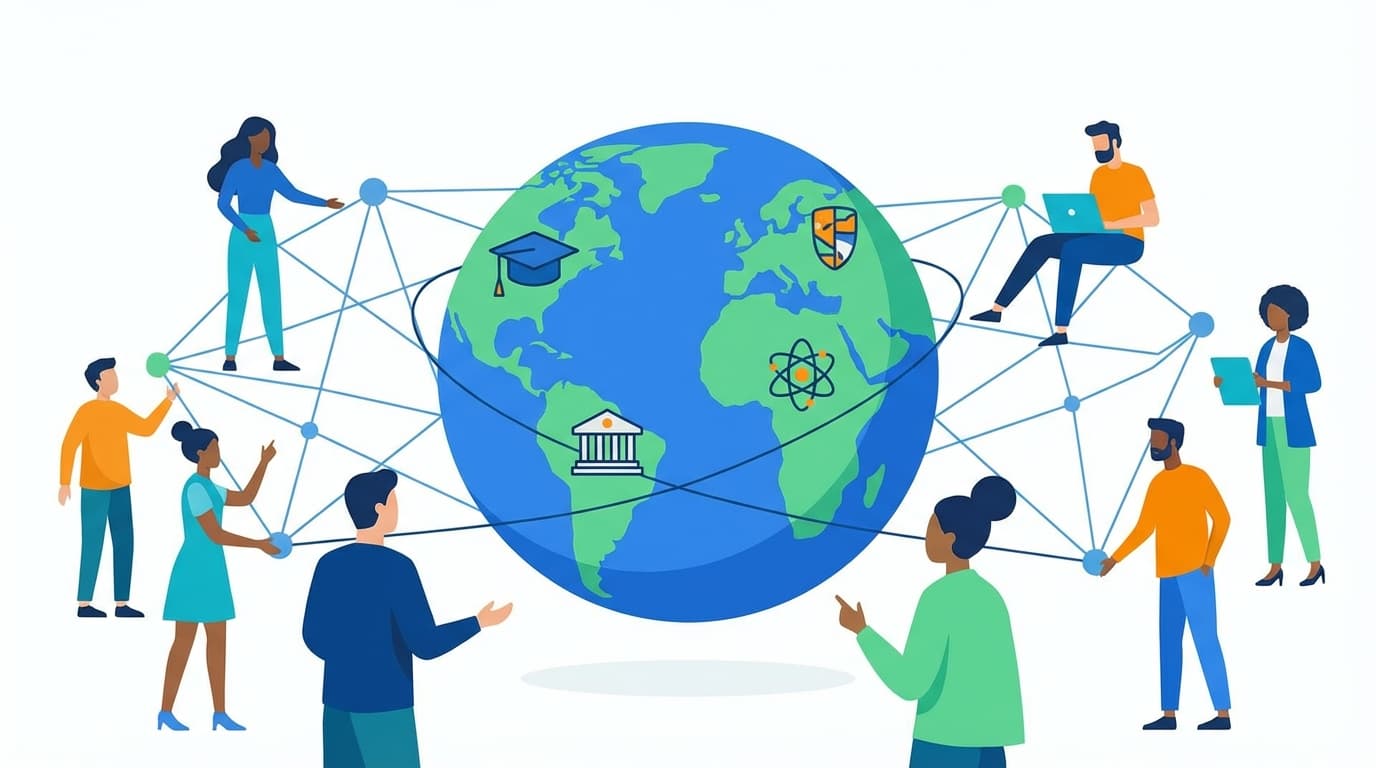
You've probably seen the blue-and-white shield. It shows up on city walls in Prague, at temple entrances in Cambodia, on signposts in Yellowstone. Most travelers recognize it instantly — but surprisingly few can explain what the organization behind it actually does, or why it exists in the first place. Whether you're a TerraHunt adventurer chasing clues through heritage-rich streets or simply someone who gets curious about the plaques on old buildings, understanding UNESCO gives you a much richer way to appreciate the places that make our planet extraordinary.
What Exactly Is UNESCO?
UNESCO — the United Nations Educational, Scientific and Cultural Organization — is a specialized agency of the United Nations, founded on November 16, 1945, in the raw aftermath of World War II. The idea behind it was both simple and ambitious: political treaties and trade deals alone aren't enough to build lasting peace. Real peace, the founders believed, must be rooted in the intellectual and moral solidarity of humanity.
The organization is headquartered in Paris, France, but its reach is genuinely global. According to Wikipedia, as of July 2023, UNESCO has 194 member states and 12 associate members. It operates through 53 regional field offices and 199 national commissions spread across the globe. As of June 2021, the organization employed 2,293 staff members — and 51% of them worked in field offices and institutes rather than at headquarters. This isn't a bureaucracy that only exists on paper.
UNESCO's work breaks down into five major program pillars:
- Education: Pursuing quality education for all and lifelong learning.
- Natural Sciences: Using science to build a better future, including initiatives for water security and biodiversity.
- Social and Human Sciences: Helping to build inclusive and just societies.
- Culture: Protecting heritage and fostering creativity.
- Communication and Information: Promoting freedom of expression and access to information.
These five pillars drive everything the organization does — from designating World Heritage Sites to tracking global literacy rates and promoting scientific research.
The World Heritage Program: UNESCO's Most Famous Achievement
Ask most people what UNESCO does, and they'll point to the World Heritage List. Established by the 1972 World Heritage Convention, the program sets out to identify and safeguard cultural and natural sites of "outstanding universal value" — places so significant that they belong to all of humanity, not just the country where they happen to sit.
The numbers are staggering. As of July 2025, the UNESCO World Heritage List includes 1,248 sites across 170 countries, broken down into 972 cultural, 235 natural, and 42 mixed properties, according to UNESCO's official data. The countries with the most UNESCO sites as of December 2024 are Italy (59), China (57), Germany (53), France (52), and Spain (50), according to Worldostats.
For anyone who loves exploring real-world locations — through TerraHunt adventures or independent travel — these numbers represent an extraordinary catalog of human achievement and natural wonder. Each site tells a story about civilization, ecology, or the intersection of both.
Beyond Physical Sites: Intangible Heritage and Documentary Memory
UNESCO's cultural preservation work goes well beyond bricks and mortar. In 2003, the organization established the Intangible Cultural Heritage list to safeguard traditions, performing arts, and craftsmanship — the living expressions of culture that can't be pinned to a single location. Think traditional music, dance forms, oral storytelling traditions, and artisanal skills passed down through generations. These are the things that give a place its soul.
Then there's the "Memory of the World" register, created in 1995, which catalogs significant and sometimes endangered documentary heritage. Items like the Bayeux Tapestry are included on this register, ensuring that irreplaceable documents and artifacts receive international recognition and protection.
Criticism of the World Heritage Program
The World Heritage program carries enormous prestige. It also carries significant baggage. One of the most persistent concerns is what critics call "Eurocentrism" in the list's composition. The imbalance is hard to ignore: as of July 2025, Europe had 473 inscribed cultural sites compared to just 63 in Africa, according to data analyzed by Visual Capitalist and Statista. Critics argue this reflects a Western-centric view of heritage and that the complex nomination process favors wealthier nations with the resources to prepare detailed applications.
Lynn Meskell, an anthropologist at Stanford University, has argued that the program's "utopian ambition of international peace... has gotten lost" and that the designation can now be used to "stimulate or resurrect conflicts," according to a Stanford Report from 2018. Some experts have gone further, describing the program as having become a "grandiose marketing tool" that can lead to over-tourism and negative outcomes for local populations.
Jeff Morgan of the Global Heritage Fund described UNESCO's tools for influencing governments as "light guns" that are "rarely used," as reported by The Independent in 2009. At that time, the organization's ultimate sanction — delisting a site — had only been used once in its entire history.
None of this negates the program's value. But it does expose the tension between idealistic global preservation goals and the messy realities of international politics and economics.
UNESCO's Role in Global Education
UNESCO is mandated to lead the global Education for All agenda, and its work here — while far less glamorous than World Heritage designations — may be even more consequential. The UNESCO Institute for Statistics (UIS) serves as the primary source for internationally comparable education data, covering over 200 countries and territories. It is also the official data source for monitoring Sustainable Development Goal 4 (SDG 4), which focuses on quality education.
The numbers are sobering. According to the UNESCO Institute for Statistics, globally, four in ten students do not meet minimum proficiency levels in reading by the end of primary school. Less than half — just 44% — achieve minimum proficiency in mathematics. These aren't abstract figures. They represent hundreds of millions of children.
Higher Education and Global Mobility
UNESCO's data also reveals dramatic shifts in higher education. Key statistics from the UNESCO Higher Education Global Data Report, based on 2022 data, include:
- Over 235 million students were enrolled in higher education worldwide in 2020, more than double the 100 million enrolled in 2000.
- The number of internationally mobile students tripled from two million in 2000 to six million in 2019.
- Globally, there were 113 women enrolled in higher education for every 100 men in 2020.
These figures underscore a massive expansion of educational access over the past two decades, even as quality gaps remain a serious concern. UNESCO's role in tracking and publicizing this data helps governments, NGOs, and international organizations understand where progress is being made — and where urgent intervention is needed.
Advancing Science for a Better Future
UNESCO's science programs aim to advance scientific knowledge and apply it toward sustainable development and peace. This includes work on water management, oceanography, and promoting science, technology, and innovation.
Read also: Český Krumlov: Best Sights, UNESCO & Why Visit
According to the 2021 UNESCO Science Report, citing 2018 data, the global number of full-time equivalent researchers reached 8.854 million — a pool that grew three times faster than the global population between 2014 and 2018.
Additional findings from the same report paint a picture of accelerating scientific activity:
- Global spending on research and development (R&D) rose by 19.2% between 2014 and 2018, increasing from 1.73% to 1.79% of global GDP, as of 2021.
- Global scientific publication output was 21% higher in 2019 than in 2015, as of 2021.
The organization also runs the Man and the Biosphere (MAB) Programme, established in 1971, which promotes a balanced relationship between people and their environments. This program designates biosphere reserves — areas where sustainable development practices are tested and demonstrated — creating yet another layer of globally recognized sites for explorers and adventurers to discover.
How Is UNESCO Funded?
Money matters, and UNESCO's funding story is more complicated — and more political — than you might expect. The organization operates on a biennial budget funded through a combination of assessed and voluntary contributions. According to UNESCO's budget and strategy documentation, the approved budget for 2022-2025 was $1.5 billion, which includes both mandatory assessed contributions from member states and voluntary donations from member states, organizations, and private entities.
Assessed contributions are mandatory payments from member states, calculated based on each country's capacity to pay. The United States' share, for example, is set at 22% of the regular budget — making it the single largest contributor when it participates.
That "when" is doing a lot of heavy lifting. In 2011, the United States and Israel stopped funding UNESCO after it admitted Palestine as a member state. This created a substantial funding gap that lasted over a decade. The United States officially rejoined UNESCO in July 2023, pledging to pay over $600 million in back dues, according to multiple sources including Britannica and UNESCO's own reporting.
Voluntary contributions have become an increasingly important part of the budget, supplementing the assessed contributions that form the financial baseline. This dual funding model gives UNESCO flexibility but also leaves it vulnerable to the political winds that can cause major contributors to walk away overnight.
Challenges and Limitations
For all its achievements, UNESCO faces real and persistent challenges that limit what it can actually accomplish.
Politicization
UNESCO's work is often caught in the crossfire of its member states' political interests. The decade-long funding dispute with the United States over Palestine's membership is a prime example. When the world's largest potential contributor walks away, programs suffer — sometimes quietly, sometimes dramatically.
Lack of Enforcement Power
Here's the fundamental problem: UNESCO has no direct power to enforce its recommendations. It relies entirely on the cooperation of member states to protect World Heritage sites and implement its programs. When states themselves are responsible for threats to cultural heritage or fail to uphold educational standards, the organization can recommend, advocate, and publicize. But it cannot compel. That's a significant limitation.
Unintended Consequences of Designation
UNESCO designation can paradoxically harm the very things it's meant to protect. The prestige of a World Heritage listing can trigger mass tourism that damages sites and displaces local populations. In some cases, the economic incentive of tourism revenue takes priority over genuine preservation and community needs, as noted by Khan Academy's analysis of unintended consequences of UNESCO World Heritage listing.
Regional Imbalances
The numbers speak for themselves. Europe's 473 cultural sites versus Africa's 63 cultural sites as of July 2025 raises serious questions about equity and representation. The nomination process requires significant technical expertise and financial resources, which inherently advantages wealthier nations with established bureaucratic infrastructure for heritage management. The playing field is far from level.
Why UNESCO Matters for Explorers and Adventurers
For anyone who loves discovering the world — and especially for TerraHunt players who thrive on exploring real-world locations and solving clues rooted in local history and culture — UNESCO's work provides an invaluable framework for understanding what makes places special.
Think about what the World Heritage List actually represents: a curated collection of 1,248 sites across 170 countries, each recognized for its outstanding universal value. That's not just a travel bucket list. It's a map of humanity's greatest achievements and nature's most extraordinary creations. Every heritage site is a potential adventure — a puzzle box of history, architecture, ecology, and human stories waiting to be cracked open.
The Intangible Cultural Heritage list adds another dimension entirely. When you encounter traditional music in a city square, witness a centuries-old craft being practiced, or stumble into a local festival, you're engaging with the living culture that UNESCO works to preserve. These moments transform travel from sightseeing into genuine cultural connection.
And UNESCO's education and science work, while less immediately visible to travelers, shapes the world we explore. The data collected by the UNESCO Institute for Statistics helps governments invest in education, which in turn creates more informed, engaged communities — the kind of communities that make exploration rewarding and meaningful.
The Bottom Line: Imperfect but Indispensable
UNESCO is an imperfect institution operating in an imperfect world. It faces legitimate criticism for bureaucracy, political influence, regional imbalances, and limited enforcement power. Its World Heritage program, while iconic, can sometimes create as many problems as it solves.
But strip away the criticism, and the core mission still holds up. Building peace through education, science, culture, and communication remains as relevant today as it was when the organization was founded in 1945. In a world of increasing fragmentation, having a global body dedicated to the idea that humanity's intellectual and cultural achievements belong to everyone isn't just nice to have. It's essential.
With 194 member states, 1,248 World Heritage Sites, and data covering over 200 countries and territories, UNESCO's reach is unmatched. For explorers, adventurers, and anyone who believes that understanding the world makes it a better place, UNESCO provides the framework, the data, and the recognition that turns remarkable places into protected treasures.
So the next time you spot that blue-and-white shield on a city wall or park entrance during a TerraHunt adventure, you'll know exactly what it stands for — and why it matters.
Explore the City Your Way
Book a self-guided GPS treasure hunt and discover hidden gems, landmarks, and local secrets with your team.
Related Articles
Museums Transform Cultural Exploration
Beyond the Velvet Rope: How Museums Are Transforming Cultural Exploration in 2026 Walk into a museum in 2026 and you might not recognize the place.
Vienna's Iconic Imperial Rulers
Vienna: Home of European Emperors and the Iconic Rulers Who Shaped It Walk through Vienna and you'll feel it — the weight of centuries pressing through every gilded ceiling, every cobblestone square, every palace gate that once swung open for...
Walking Tours Showcasing Hidden Landmarks
The Ultimate City Guide Strategy: How to Create Walking Tours That Showcase Hidden Landmarks in 2026 Picture this: you're walking down a side street you've passed a hundred times, and someone points out a faded mosaic above a doorway — a remnant of...