
Vienna's Iconic Imperial Rulers
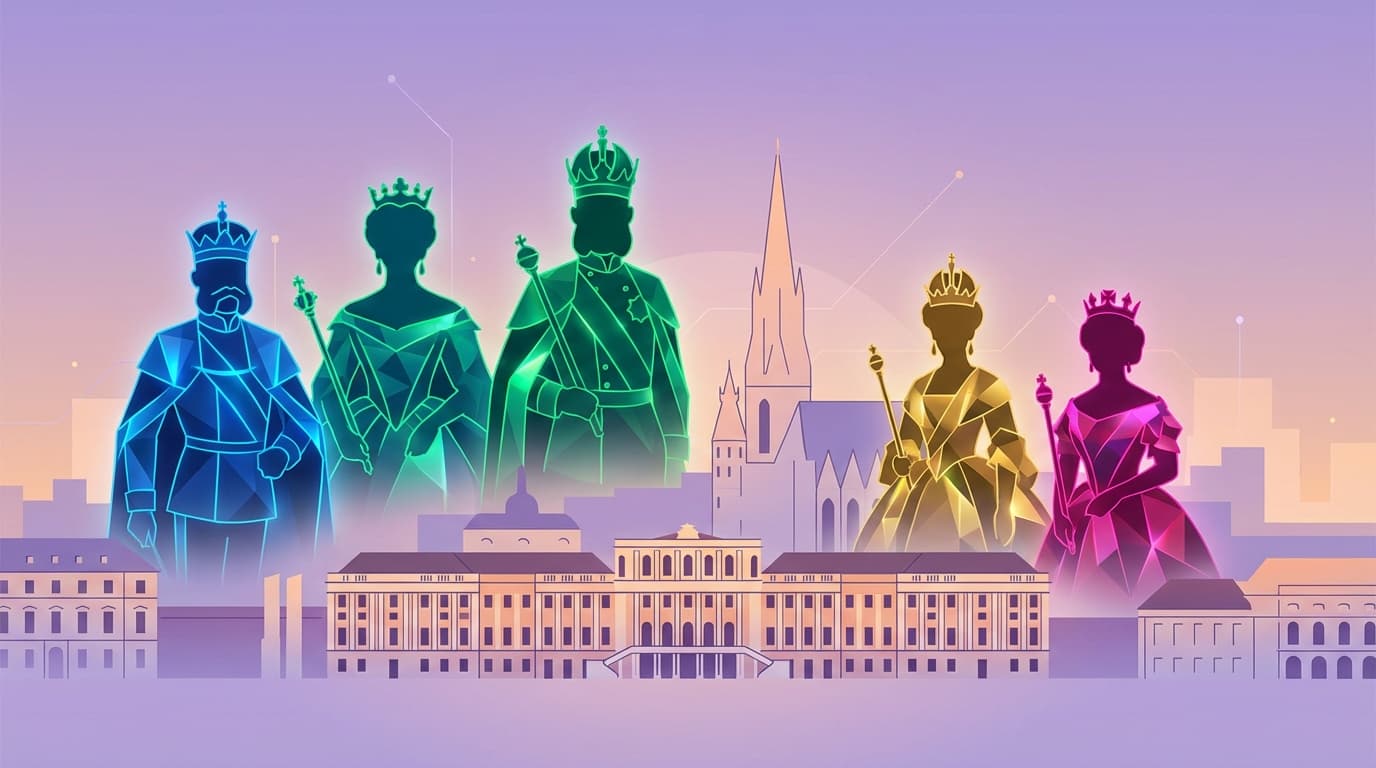
Walk through Vienna and you'll feel it — the weight of centuries pressing through every gilded ceiling, every cobblestone square, every palace gate that once swung open for emperors. For more than six hundred years, this city on the Danube served as the beating heart of one of Europe's most powerful dynasties: the Habsburgs. As the capital of the Holy Roman Empire, the Austrian Empire, and later the Austro-Hungarian Empire, Vienna was never just a seat of government. It was a stage. Some of history's most iconic monarchs lived here, ruled here, and left marks so deep the city still carries them. The grand palaces, sweeping boulevards, and world-class museums that define Vienna today? They are living testaments to that extraordinary imperial past.
For anyone exploring Vienna — whether on foot, through a treasure hunt, or as part of a city-wide adventure — knowing the emperors and empresses who called this city home changes everything. Suddenly, every baroque façade becomes a chapter in a thrilling historical narrative. So which rulers are most closely tied to Vienna? Let's walk through the centuries and meet them.
The Habsburgs: Six Centuries of Power Rooted in Vienna
No royal family is more synonymous with Vienna than the Habsburgs. They used the city as their primary residence and seat of power for over 600 years. Their rise to dominance in the region began in 1278, when Rudolf I established Habsburg rule, and the dynasty subsequently moved its power base to Vienna, according to historical accounts compiled by TourismAttractions and Secret Vienna Tours.
Read also: Why Visit Vienna? Historic Center Highlights 2026
By the 15th century, Vienna was firmly established as the dynasty's seat. Then came a pivotal moment: in 1440, the Habsburgs secured the title of Holy Roman Emperor — a position they would hold almost uninterruptedly until the empire's dissolution in 1806, with only a brief interruption in the 1740s. This near-continuous grip on the most prestigious title in European politics cemented Vienna's status as a center of continental power.
The city's imperial identity evolved through several distinct political phases:
- Holy Roman Empire: Vienna served as the de facto capital for centuries under Habsburg Holy Roman Emperors.
- Austrian Empire (from 1804): During the Napoleonic Wars, the newly formed Austrian Empire was established with Vienna as its capital.
- Austro-Hungarian Empire (from 1867): The Austro-Hungarian Compromise created a dual monarchy, and Vienna remained the imperial capital on the Austrian side.
This long, unbroken period of imperial rule left an indelible mark on the city — visible in its grand palaces, stately homes, and cultural institutions that visitors can still explore today. The architectural and cultural texture of Vienna is, in many ways, a direct product of Habsburg ambition, taste, and governance.
Empress Maria Theresa: The Only Female Ruler Who Modernized an Empire
Empress Maria Theresa reigned from 1740 to 1780, and she stands as one of the most significant rulers in Habsburg and Viennese history. She was the only female ruler in the Habsburg dominions. Her 40-year reign brought sweeping reform and modernization that fundamentally reshaped both the empire and its capital city.
Read also: Stephansdom Vienna's Unique Must-Visit
Her path to power was anything but smooth. She faced immediate challenges to her succession in the War of the Austrian Succession. But she proved to be a formidable and effective ruler whose reforms laid the groundwork for a modern Austrian state, as noted by Vienna Unwrapped and Die Welt der Habsburger.
Administrative and Military Reforms
One of Maria Theresa's most consequential achievements was the centralization of state administration. Before her reign, the bureaucracy had been fragmented and inefficient. She built a more streamlined system controlled from Vienna, strengthening the capital's role as the nerve center of the empire. On the military front, she professionalized the armed forces, founding the Theresian Military Academy in Wiener Neustadt — an institution that bore her name and reflected her commitment to building a capable defense apparatus.
Educational and Social Reforms
Maria Theresa's most lasting legacy may well be her pioneering commitment to education. In 1774, she introduced compulsory primary education for all children — a groundbreaking step toward universal education that was remarkably progressive for its time. She also invested heavily in public health, recruiting the renowned physician Gerard van Swieten, who founded the Vienna General Hospital. These reforms turned Vienna from a purely political capital into a center of learning and medical advancement, according to Lumen Learning and Salute to Vienna.
Architectural Legacy: Schönbrunn Palace
Maria Theresa was not the most prolific builder in Vienna compared to later periods, but her influence is strongly felt at Schönbrunn Palace, which she transformed into a magnificent imperial summer residence. Today, Schönbrunn remains one of Vienna's most visited landmarks and a UNESCO World Heritage Site. Walking through its ornate rooms and sprawling gardens, visitors can still sense the presence of the empress who made it her own — a woman who governed an empire while raising 16 children, including the future Marie Antoinette of France.
Historians and cultural experts widely respect Maria Theresa as a strong and reforming ruler. Her legacy in Vienna goes beyond architecture. It is institutional — the systems of education and governance she established continued to shape Austrian society long after her death.
Emperor Franz Joseph I: The Man Who Built Modern Vienna
Emperor Franz Joseph I reigned from 1848 to 1916 — a span of nearly 68 years, one of the longest reigns in European history. He took the throne amid the tumultuous 1848 revolutions and ruled until his death during World War I. No single ruler did more to shape the physical Vienna that visitors experience today.
Read also: Budapest: Historic Beauty Meets GPS Treasure Hunts
According to Visiting Vienna and Wien.info, Franz Joseph's impact on the city was transformative. He turned Vienna from a walled medieval city into a modern European metropolis.
The Ringstrasse: Vienna's Most Iconic Boulevard
Franz Joseph's most significant contribution to Vienna's urban landscape came with his 1857 decree to demolish the old city walls and construct the Ringstrasse boulevard in their place. This was nothing short of a complete reimagining of the city's core. The construction of the Ringstrasse gave rise to many of Vienna's most iconic buildings, including:
- The State Opera House — one of the world's premier opera venues
- The Kunsthistorisches Museum — the Museum of Art History, housing one of Europe's finest art collections
- The Naturhistorisches Museum — the Natural History Museum, a mirror image of its art counterpart
- The Parliament — designed in a classical Greek style to evoke the birthplace of democracy
- The Rathaus (City Hall) — a neo-Gothic masterpiece that remains the seat of Vienna's city government
The Ringstrasse is not just a road. It is an open-air museum of 19th-century architecture and a testament to Franz Joseph's vision of Vienna as a world-class capital. Walking or cycling along this grand boulevard remains one of the most rewarding ways to experience the city's imperial heritage.
Imperial Residences: The Hofburg and Schönbrunn
Franz Joseph spent winter months at the Hofburg Palace and summers at Schönbrunn Palace, maintaining the Habsburg tradition of seasonal residences. The Imperial Apartments in the Hofburg, now open to the public, offer a direct glimpse into his life and reign. These rooms, preserved much as they were during his time, reveal a ruler who was famously disciplined and devoted to duty — rising early each morning to work at his desk, as documented by Britannica and EBSCO Research Starters.
The Dual Monarchy
Franz Joseph's influence extended well beyond architecture. He made one of the most consequential political decisions of his era when, to stabilize his increasingly restive empire, he agreed to the Austro-Hungarian Compromise of 1867. This created the Dual Monarchy, making him both Emperor of Austria and King of Hungary and fundamentally restructuring the empire's governance. Vienna remained the imperial capital on the Austrian side, and the city continued to flourish as a cultural and political hub under this new arrangement.
Franz Joseph is widely seen as the embodiment of the late Habsburg Empire — a figure of duty, tradition, and quiet endurance who presided over both the empire's greatest cultural flowering and its eventual decline.
Empress Elisabeth "Sisi": The Reluctant Empress Who Became a Legend
Empress Elisabeth of Austria, universally known as "Sisi," is arguably the most famous woman in Habsburg history and one of the most captivating figures associated with Vienna. Born into the Bavarian royal family in 1837, she married Emperor Franz Joseph I at the age of 16, stepping into a world of rigid court protocol that would define — and torment — her for the rest of her life.
According to Visiting Vienna and austria.info, Sisi's story is a blend of fairytale romance, personal struggle, and tragic death that continues to fascinate people worldwide.
A Reluctant Empress in a Rigid Court
Unlike many royal consorts who adapted to court life, Sisi found the strict etiquette of the Habsburg court suffocating. She was unprepared for the demands of her role and often withdrew, preferring to travel extensively across Europe and beyond. Her restless spirit and desire for freedom stood in stark contrast to the formality of the Viennese court — a tension that defined both her public and private life.
A Cultural Icon of Beauty and Style
Sisi was revered for her extraordinary beauty and became a fashion icon of her era. She was considered one of the best female equestrians in Europe, and her obsession with maintaining her youthful figure and appearance became legendary. Her elaborate beauty routines and her famous floor-length hair have become part of the mythology that surrounds her to this day, as documented by Simply Munich and Wikipedia's entry on Empress Elisabeth of Austria.
A Life Marked by Tragedy
Behind the glamour, Sisi's life was shadowed by devastating personal loss. She endured the death of her first daughter and, most devastatingly, the suicide of her only son, Crown Prince Rudolf. These losses deepened her already melancholic nature and drove her further from the Viennese court. Her own life was cut short in 1898 when she was assassinated by an Italian anarchist in Geneva — a shocking end to a life already heavy with sorrow.
Sisi's Enduring Legacy in Vienna
Sisi's tragic story and captivating personality have fed a lasting myth that remains a significant part of Vienna's tourist culture to this day. The Sisi Museum in the Hofburg is dedicated to her life, showcasing numerous personal artifacts that bring her story to vivid life. From her dresses and jewelry to intimate personal items, the museum offers visitors an unusually close encounter with this enigmatic empress.
Maria Theresa is respected as a reformer. Franz Joseph is seen as the embodiment of imperial duty. But it is Sisi who most often captures the public imagination. Her story resonates because it is deeply human — a tale of a free spirit trapped by circumstance, of beauty shadowed by grief, and of a woman who remains as fascinating in death as she was in life.
Exploring Vienna's Imperial Legacy Today
Vienna's identity as the home of European emperors is not confined to history books. The city's imperial past is woven into its very fabric, visible in every grand palace, museum, and boulevard. For modern explorers, Vienna offers an extraordinary chance to walk in the footsteps of the monarchs who shaped European history.
Key sites connected to Vienna's imperial rulers include:
- Schönbrunn Palace: The magnificent summer residence transformed by Maria Theresa and later used by Franz Joseph and Sisi.
- The Hofburg Palace: The winter residence of the Habsburgs, now home to the Imperial Apartments, the Sisi Museum, and the Silver Collection.
- The Ringstrasse: Franz Joseph's grand boulevard, lined with monumental buildings that define Vienna's skyline.
- The Kunsthistorisches Museum and Naturhistorisches Museum: Twin museums born from the Ringstrasse project, housing world-class collections.
- The State Opera House: Another jewel of the Ringstrasse era, and one of the world's most prestigious opera venues.
These landmarks are not static monuments. They are living spaces that tell the stories of the people who built them, lived in them, and shaped history within their walls. Whether you are solving clues in a city-wide treasure hunt or simply wandering Vienna's streets with a curious eye, the imperial history of the Habsburgs adds layers of meaning to every corner of this extraordinary city.
Why Vienna's Imperial History Still Matters
Vienna's centuries-long role as the heart of a vast empire is not merely a historical curiosity. It is the foundation of the city's cultural identity. The architectural grandeur, the rich heritage, and the historical significance that draw millions of visitors each year — all of it traces directly back to the Habsburg dynasty and the emperors and empresses who called Vienna home.
Maria Theresa, Franz Joseph I, and Sisi are not simply historical characters. They are deeply embedded in the cultural identity of Vienna itself. Maria Theresa's educational reforms echo in Austria's modern institutions. Franz Joseph's Ringstrasse remains the city's defining architectural feature. And Sisi's story continues to captivate new generations, keeping the human drama of the Habsburg court as compelling as ever.
For treasure hunters, history enthusiasts, and urban explorers alike, Vienna offers something rare: a city where the past is not buried but displayed proudly, waiting to be discovered around every corner. The emperors may be gone, but their Vienna endures — magnificent, storied, and endlessly fascinating.
Explore the City Your Way
Book a self-guided GPS treasure hunt and discover hidden gems, landmarks, and local secrets with your team.
Related Articles

Museums Transform Cultural Exploration
Beyond the Velvet Rope: How Museums Are Transforming Cultural Exploration in 2026 Walk into a museum in 2026 and you might not recognize the place.

UNESCO Explained Simply
What Is UNESCO and What Is It Good For? You've probably seen the blue-and-white shield. It shows up on city walls in Prague, at temple entrances in Cambodia, on signposts in Yellowstone.

Walking Tours Showcasing Hidden Landmarks
The Ultimate City Guide Strategy: How to Create Walking Tours That Showcase Hidden Landmarks in 2026 Picture this: you're walking down a side street you've passed a hundred times, and someone points out a faded mosaic above a doorway — a remnant of...